 Bachir Saouaf

A familiar scene
Picture a typical morning at a customer service desk: 40 emails, 12 calls to return, and 3 purchase orders waiting. Each one arrives in a different format — a PDF, a scanned fax, a one-line text message. Someone has to read each one and retype it, by hand, into the ERP, the CRM, and the web platform.
Source: Illustrative
It's the kind of repetitive, format-sensitive work that naturally raises the question: could AI handle this?
“We could automate this with AI … but do we want to give it access to our orders, our prices, and our customers?”
That hesitation is reasonable. Before deciding how much access to give an AI system, it's worth stepping back and asking a more basic question: is this actually a job for AI, or for a traditional program? The two technologies work in fundamentally different ways, and each is good at different things.
Deterministic systems: traditional automation
Traditional programming — the logic behind ERP integrations, pricing engines, and scheduled data exports — is deterministic. Input goes in, predefined rules are applied, and a result comes out.
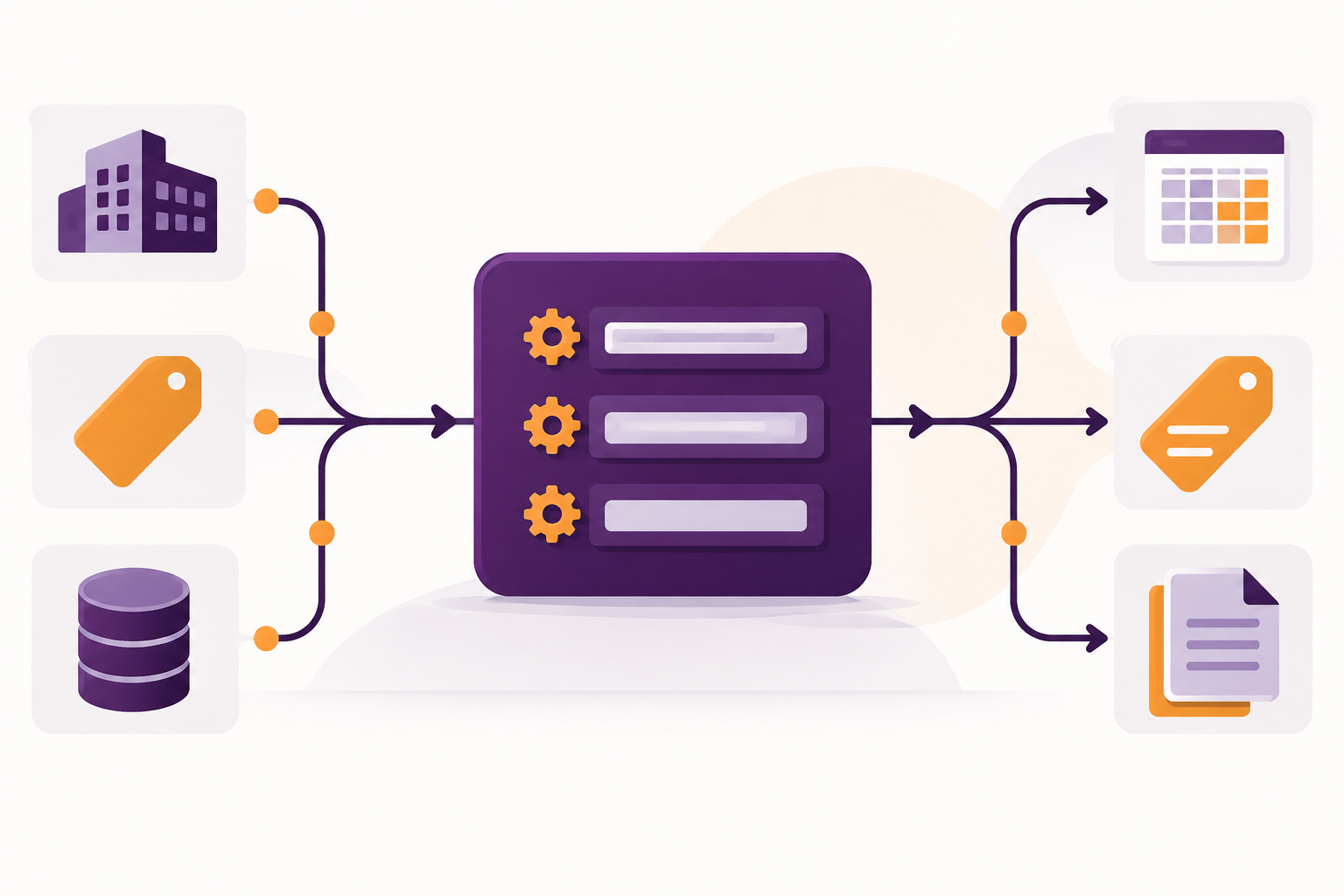
Rules are defined in advance. The logic is written before the system runs, not inferred on the fly.
Same input, same output. Given identical data, the system produces exactly the same result every time.
Fully explainable. You can trace the exact logical path that led to a given result.
B2B example: every night at 11 p.m., export inventory levels from SAP Business One and transmit them to the e-commerce platform. Same data, same result, every time.
When to use traditional programming
The data is structured
The rules are known
The result must be perfectly reproducible
Calculations or validations must be exact
Typical examples: ERP synchronization, price calculation, tax rules, inventory tracking, invoice generation, credit rules, data exports.
Generative AI: stochastic by nature
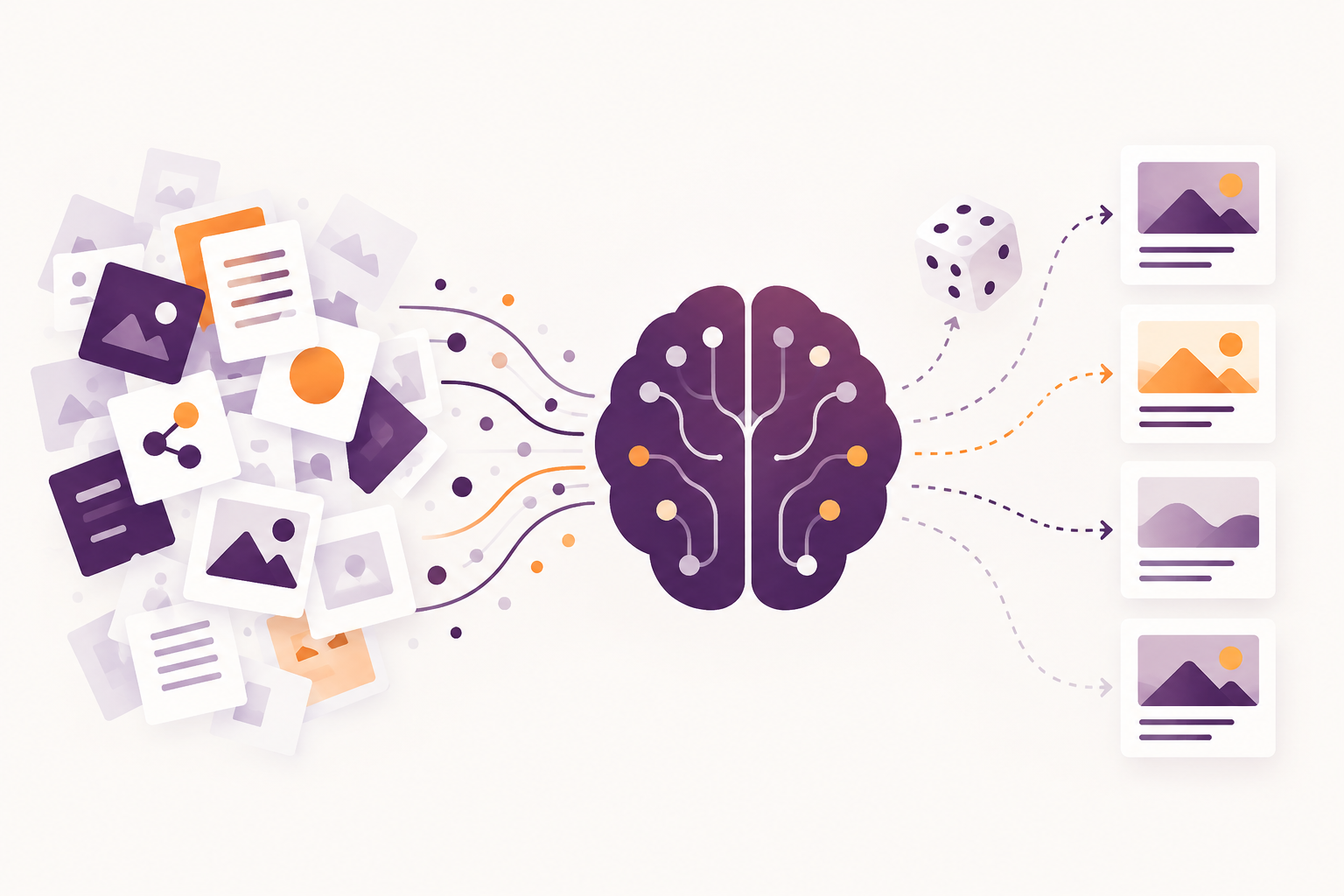
Generative AI works differently. Rather than following rules written by a developer, it learns patterns from large numbers of examples. That changes what it can do — and what it can't guarantee.
Learns from examples. The model identifies patterns from large volumes of data rather than following explicit rules.
Probabilistic, not deterministic. The output is a likely answer, not a guaranteed one — and it can be wrong.
Not fully explainable. The exact reasoning path behind a given answer generally can't be traced or guaranteed.
When to use AI
The information is unstructured
Human language needs to be understood
Situations vary too much to be reduced to fixed rules
The task involves generating, summarizing, classifying, or interpreting content
B2B example: “Hi, can you send me 12 cases of the same product as last week, plus 6 boxes of the other format? PO 4582.” A traditional program would struggle to parse this. An AI model can understand the intent and turn the message into structured order data.
Key takeaway: AI doesn't replace deterministic systems — it complements them. AI is good at understanding. Traditional systems are good at executing reliably.
Often, the best solution is hybrid: the HeroRoute example
In practice, the most effective systems rarely rely on AI or traditional logic alone — they combine both. HeroShop's delivery route planning tool, HeroRoute, is one example.
Optimization algorithm. Does the bulk of the work under fixed constraints: available trucks, delivery time windows, distances.
Artificial intelligence. Enriches certain inputs and predictions, such as traffic estimates, that are harder to reduce to fixed rules.
The result: more accurate, better-optimized delivery routes — not because AI replaced the optimization logic, but because it fed it better information.
Understanding this distinction — deterministic versus probabilistic, rule-following versus pattern-learning — is the first step before connecting an AI agent to sensitive business systems. The next question is how much control and access that agent should actually get. That's the subject of the next article in this series.