In the first two parts of this series, we looked at the difference between traditional automation and generative AI, and at how to put guardrails around an AI agent: constrained outputs, limited data sources, limited actions, and a model of progressive trust. This final part looks at the piece that ties everything together: how a company actually controls what an AI agent can see and do inside its systems — and what that looks like in real B2B workflows.
The security principle: AI should never have access to everything
Picture an agent that receives this request: "Give me the list of customers with their contact details and sales over the last 24 months." Technically, the agent may well be capable of producing that list. The real question is different: should it have the right to do it?
This is why an AI agent should never talk directly to every database in the company. Between the agent and the ERP, CRM, and other systems sits a data hub — a layer whose job is to enforce permissions and business rules before anything reaches the agent, and before any action the agent proposes is carried out.
The hub decides. which data the agent can read, which data it can modify, which actions it can execute, for which customer, up to what amount, and under what circumstances.
The agent never sees the whole system. it only sees what the hub lets through — scoped to its task, its user, and its permissions.
The AI understands. HeroShop controls. The ERP executes and records.
In this model, systems like HeroShop are no longer just transactional portals. They become the control layer between a company's data and the AI agents that act on it.
Assistant or agent? The difference matters
The two terms get used interchangeably, but they describe very different levels of capability — and very different levels of risk.
AI assistant. answers a question or provides information. Example: "What is the availability of this product?" One question, one answer, no action taken.
AI agent. can use tools and carry out a multi-step process: understand the request, search for information, decide what it's allowed to do based on its permissions, act, verify the result, and log everything. Example: taking an order from start to finish.
Every step in that agent loop happens inside the permissions defined by the data hub — which is exactly why the hub matters so much more once an agent starts acting, not just answering.
Three concrete B2B use cases
1. Order entry from PDFs, emails, and texts
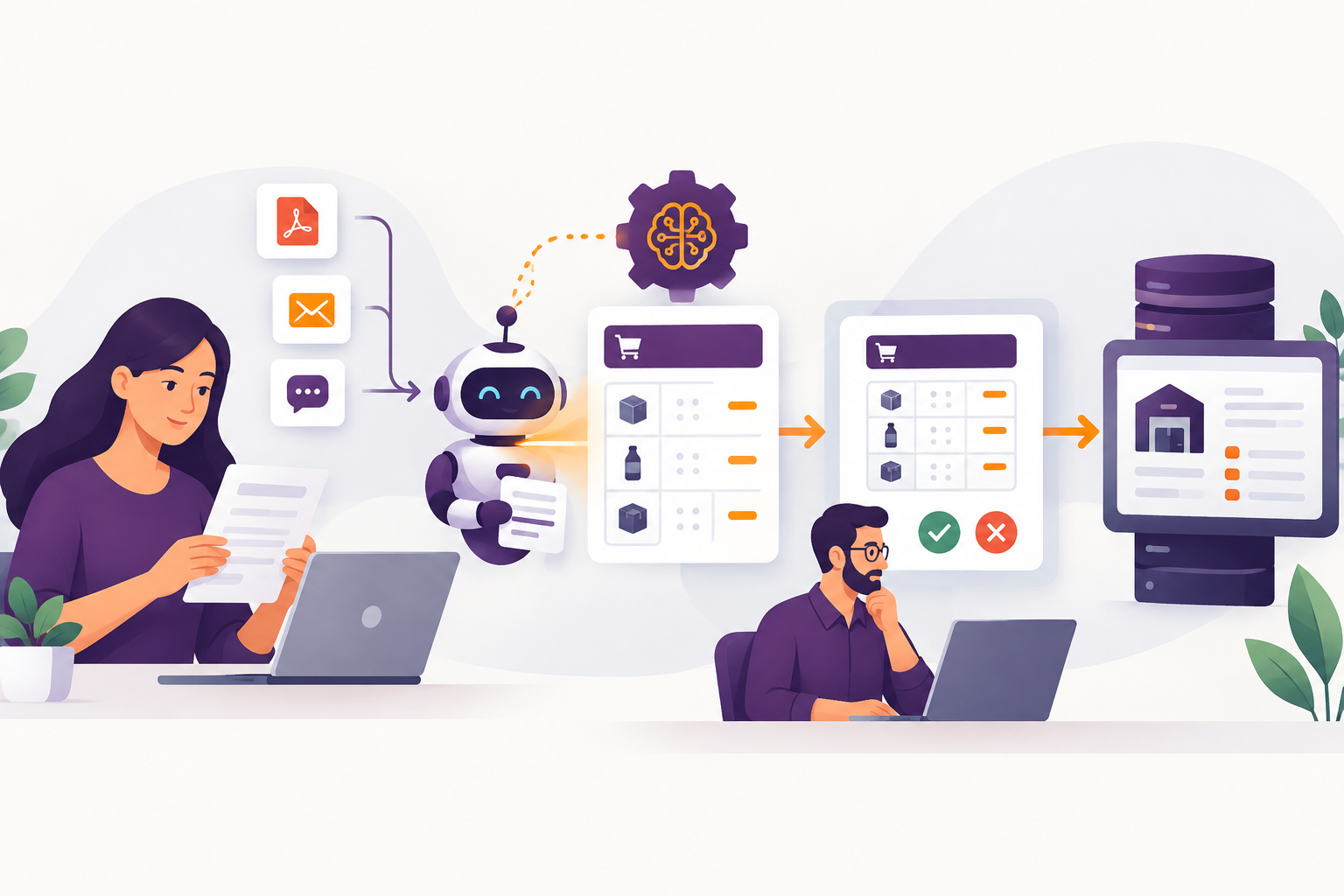
An agent reads an incoming purchase order — a PDF, an email, even a text message — and uses OCR combined with AI to identify the customer, the products, the quantities, and the PO number. It normalizes the data, prepares the order, and submits it (or not) to an employee for validation. Once approved, the order is transmitted to the ERP — for example SAP Business One.
2. Conversational agents
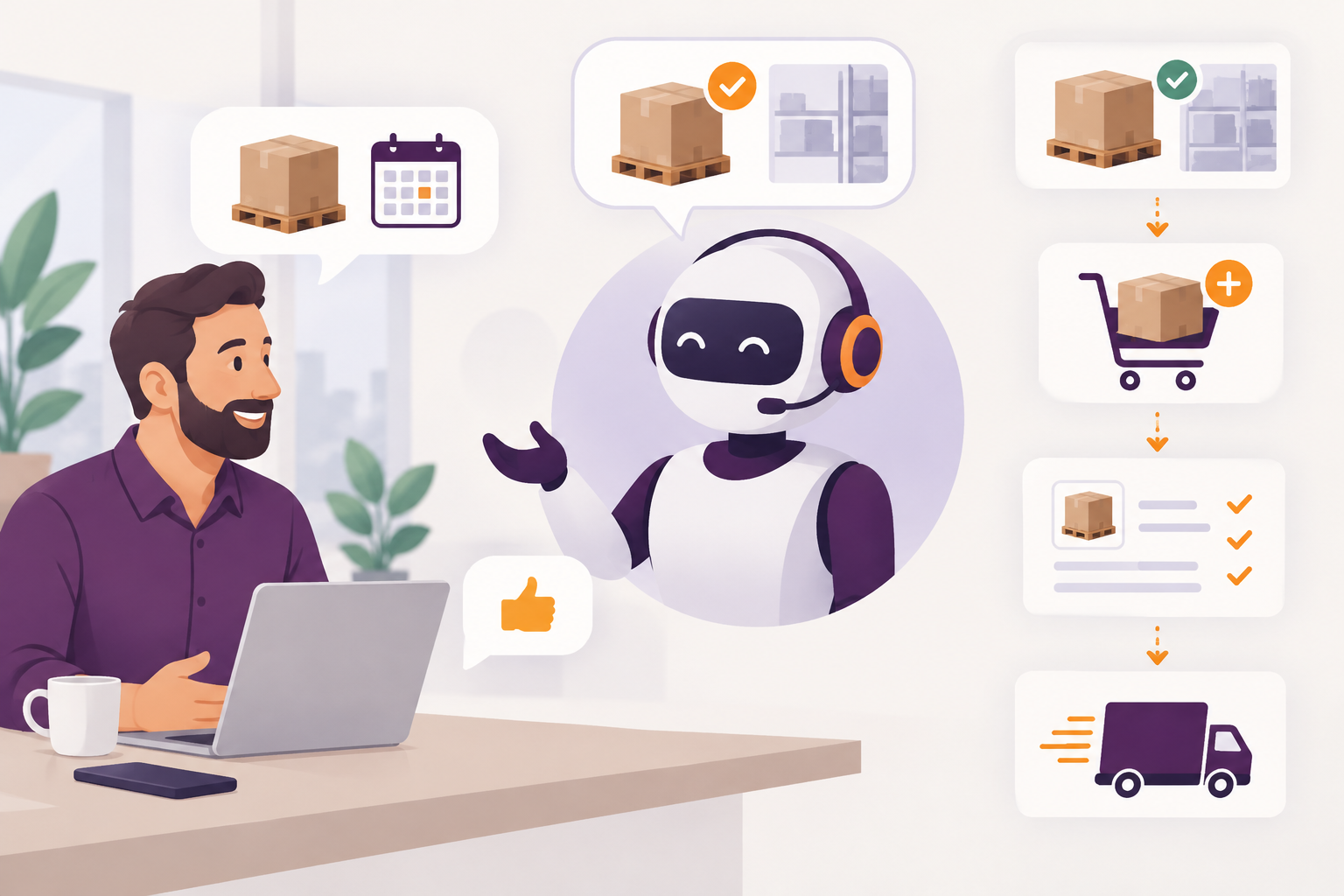
A voice or chat agent takes an order directly from a customer. It can answer questions about product availability, purchase history, or accounts receivable, prepare a cart, confirm it with the customer, and submit the order. A simple exchange illustrates the flow: the customer asks "Do you have 20 cases of product X for Thursday?", the agent replies "Yes, they're in stock. Should I prepare the cart?", and the customer confirms.
3. Sales agent for new accounts
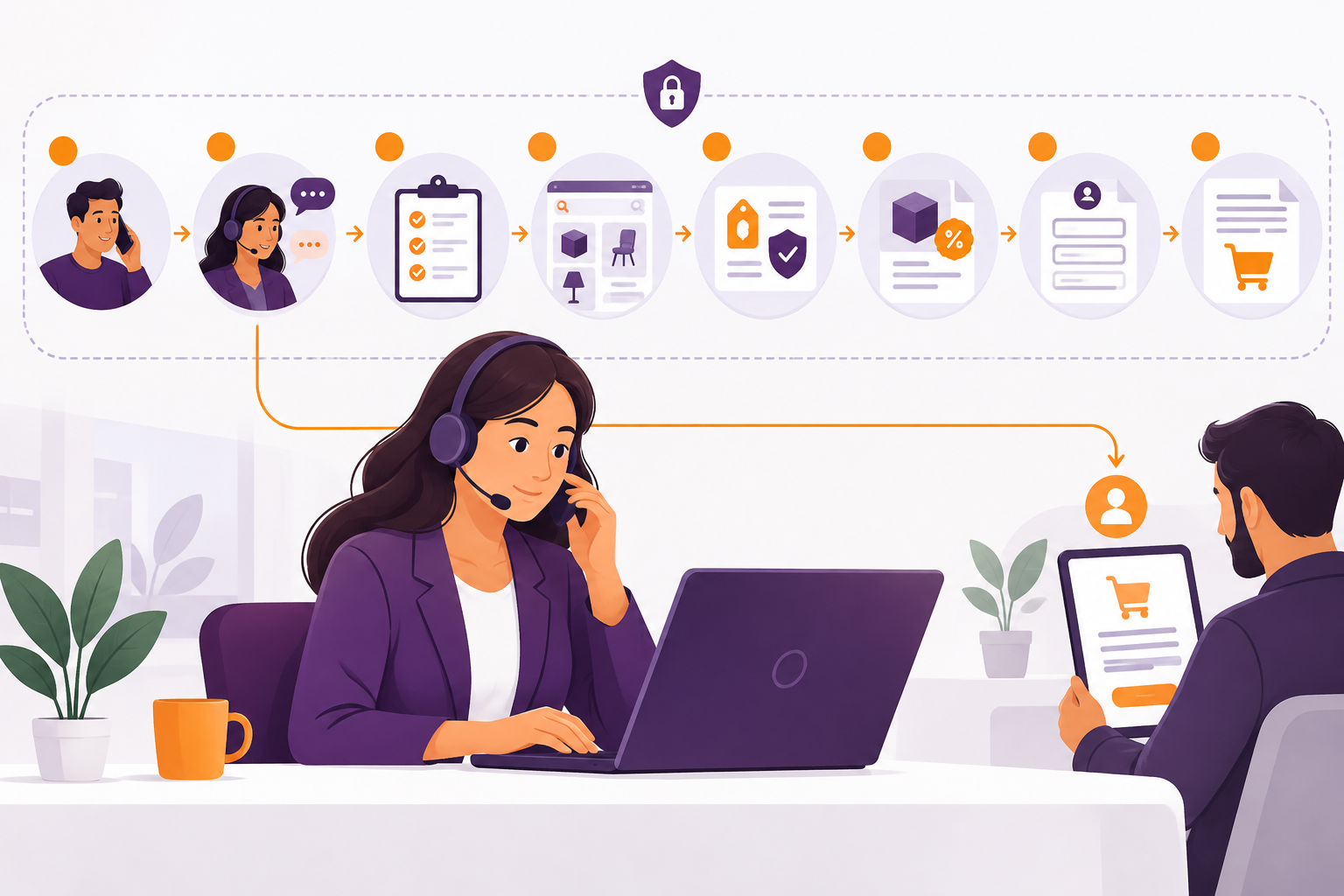
A prospective customer calls or visits the company's site. The agent identifies the need, asks a few qualifying questions, checks the catalog, checks authorized pricing, proposes an introductory price on a product, collects the required information, creates the account, and prepares the first order for human validation. Eight steps, each one bounded by the agent's permissions.
Building toward the autonomous enterprise
None of this gets built in a day. The path from a helpful assistant to a trusted, semi-autonomous agent follows a consistent set of steps.
1. Start small. pick a narrow, well-defined task before expanding scope.
2. Keep a human in the loop. especially while the agent is still proving itself.
3. Grant access to the minimum necessary. only the data and systems the task actually requires.
4. Increase autonomy progressively. as the agent demonstrates reliability, move from recommending to executing with approval to automatic handling under set thresholds.
5. Log every action and review regularly. so nothing happens inside a black box.
The goal isn't to hand the business over to artificial intelligence. It's to progressively hand over the tasks it proves it can perform reliably — while keeping control of the data, the rules, and the decisions that matter.
Across this three-part article series, the thread running through every example is the same: AI and traditional systems aren’t competing approaches, they’re complementary ones. Generative AI is what lets a business finally make sense of messy, human, unstructured input — an email, a phone call, a handwritten PO. For us, it's the HeroShop Hub that takes it from there: it validates the data against business constraints, runs the calculations, and makes sure everything is consistent before anything is transmitted to the ERP, which remains the system of record, trusted to execute exactly as instructed, every time. The work of building an AI-enabled B2B operation isn’t about choosing one over the other; it’s about designing that layer in between — the permissions, the thresholds, the validation rules, the logging — that lets an agent do more over time without ever being handed more trust than it has earned.